Vancian Stacks

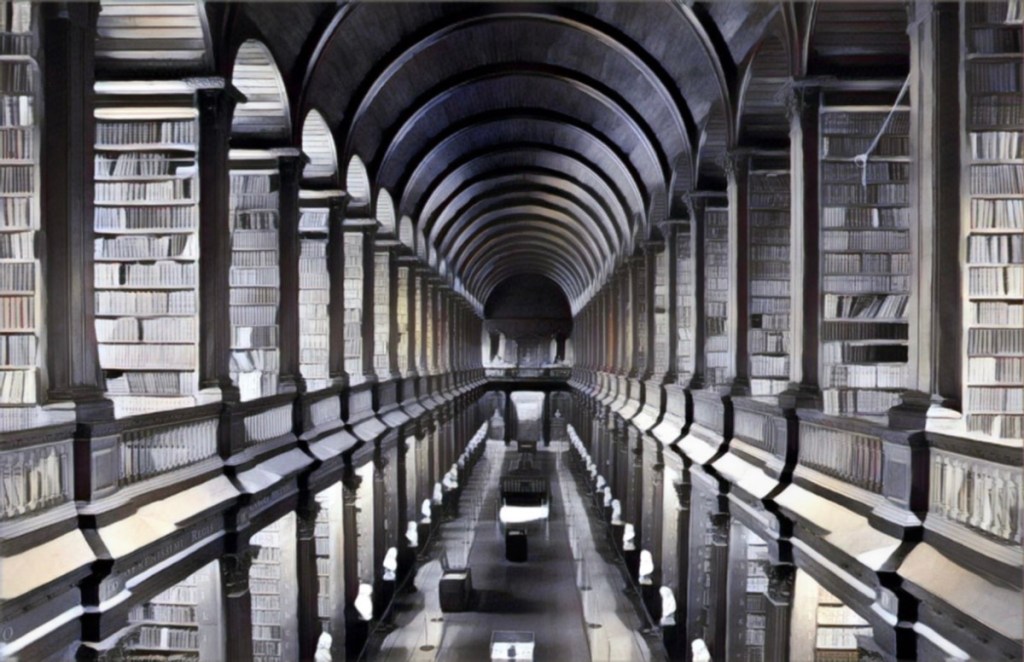
Trinity College Library, Dublin, Ireland
britannica.com w/ Prisma Gothic filter

In March ‘26 I read Matt Schumer’s “Something Big Is Happening”, which encouraged me to explore AI more than scratching I had been doing at the corners. Copilot, Notebook LM, Gemini Gems are all things that I had experimented with; most as search without ads, research primers, and custom agents to help shape complex messages.

Schumer fired my imagination in his descriptions of software development through natural language and the concept of machines building machines. Here was an opportunity (for $20 a month) to try my hand at building software applications that I dreamed of as a washed up CS undergrad who happily cut over to history. Like many of my technology adventures I apply them to my hobbies first to help me learn their practical and professional applications.

I started big, I mean really big. Why not build a tool that could be used to play Holmes & Clark solo. I wrestled with context preservation, establishing design principals, project instructions, false declarations, and genuine hallucinations. It was great!

I scaled back in some areas, established a framework that is improving results, and in support of my regular AD&D 1 Eeeeeee game tinkered with some Claude.ai skills to serve my immediate needs and produced:

  • DMG Appendix A – Random Dungeon Generator – in progress
  • DMG Appendix C – Random Dungeon Stocking – done
  • DMG Appendix C – Random Party Generator – done
  • DMG pg xx – Random Gems & Jewelry – done
  • Custom Magic-User Spellbook Generator – supporting PHB, UA, and Wizards Spell Compendium via data sourced from What’s In Your Spellbook (thank you Delta) – done

The spellbook generator is based on principals I’m using to define higher level characters, where spell and magic item selection are significant blocking points in my preparing for play quickly.

Here’s a sample library of spellbooks & user guide, both prepared in just a few minutes by the Claude.ai skill that could produce trillions more in whatever combination might be of interest.

Please let me know if there is any interest in reading more about how I’ve been experimenting with AI or if the above skills might be useful to you too.
Urmalk the Boundless

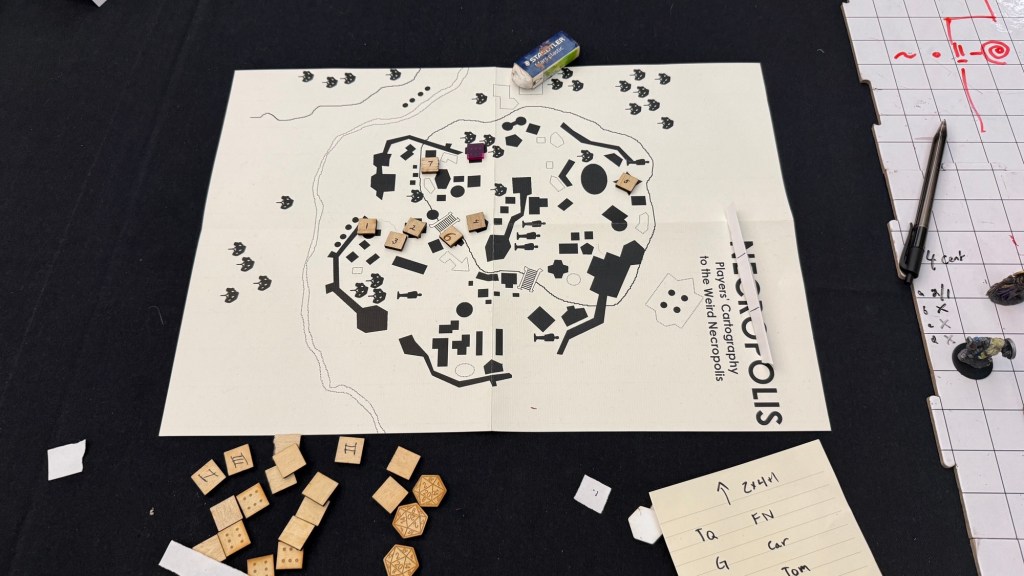
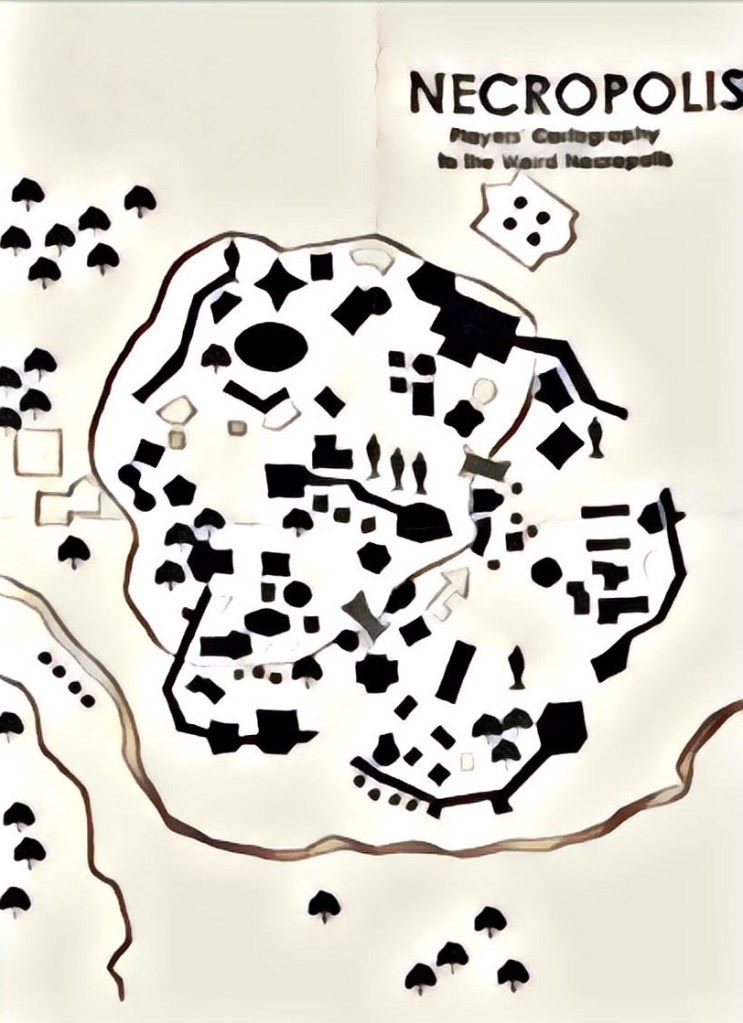
Prisma Gothic filter of the Echoes From Fomalhaut No. 12 players map

Open Tables

Packing for DunDraCon 49 last weekend I grabbed a few copies of Holmes & Clark in the off chance of organizing a pickup game. Leafing through a few adventures eventually settled on Urmalk the Boundless as I had run it a few months earlier at North Texas RPG con.

This is a fine little adventure for levels 3 to 5 offering an outdoor sandbox location and an underground dungeon. The outdoor area has some very interesting keyed locations though much of the exploration here is done though a series of random table roles.

I had such a fantastic time running this adventure at DunDraCon I was committed to doing so again as soon as possible.

Random Tables

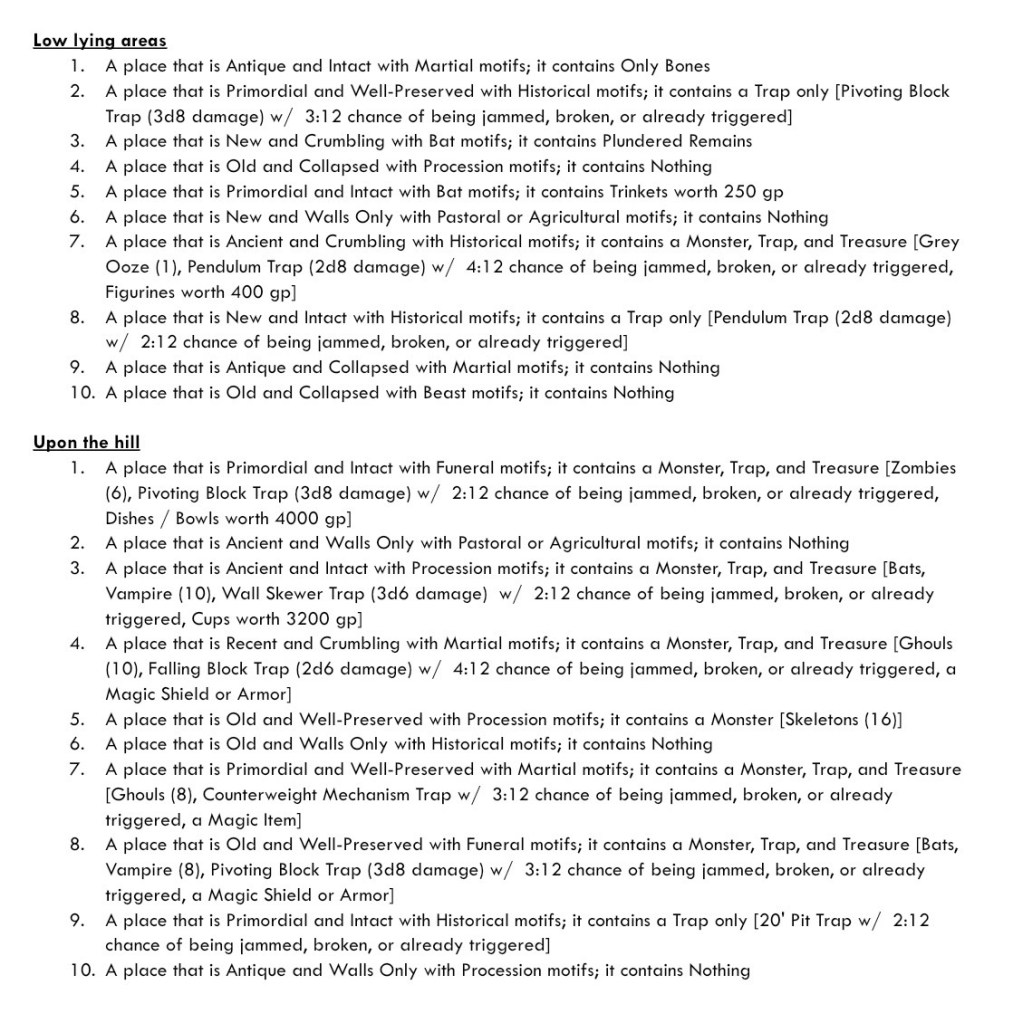
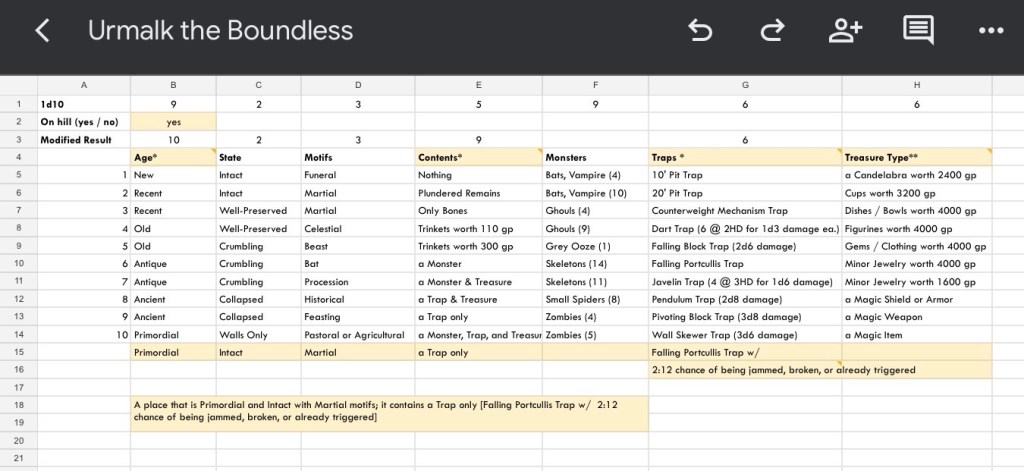
The exploration in Urmalk the Boundless is driven by random tables, a series of d10 rolls with some conditional modifiers applied to these rolls. A little fiddly at the table and a prepared list would likely help streamline the play experience. In support of that effort I prepared a Google Sheet to generate these results quickly and consistently, available here.

Real Tables

Some thoughts on running Urmalk the Boundless:

  • Provide the PC with the highest Wis some rumors
  • PCs approach the Necropolis from a random (1d4) direction
  • The Necropolis is 1d6 hours form the nearby town
  • Provide the players a token to show there position on the map
  • Mark off explored locations with more tokens on the map
  • Mark the DM map with location of keyed monsters so that it can be understood if they will be draw by a nearby commotion
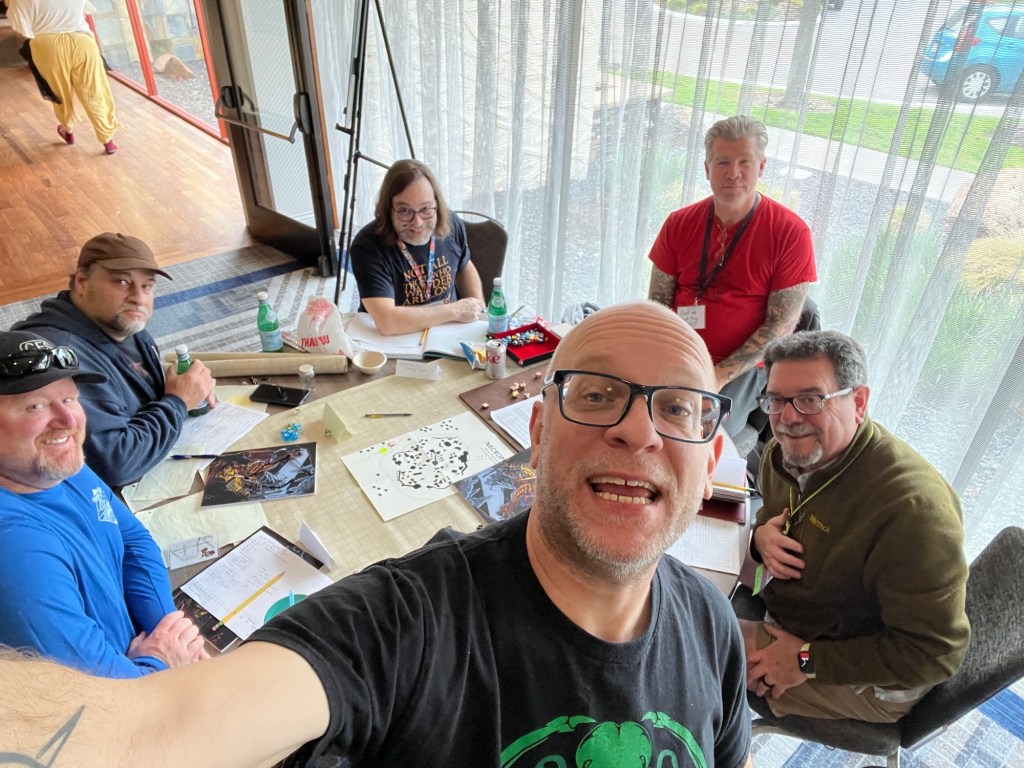
  • At North Texas RPG Con ‘25 we had as few as 2 players all the way up to 12 at one point, this was an epic session easily over 10 hour, Jeff Dee joined us in the final hours and that was a real highlight
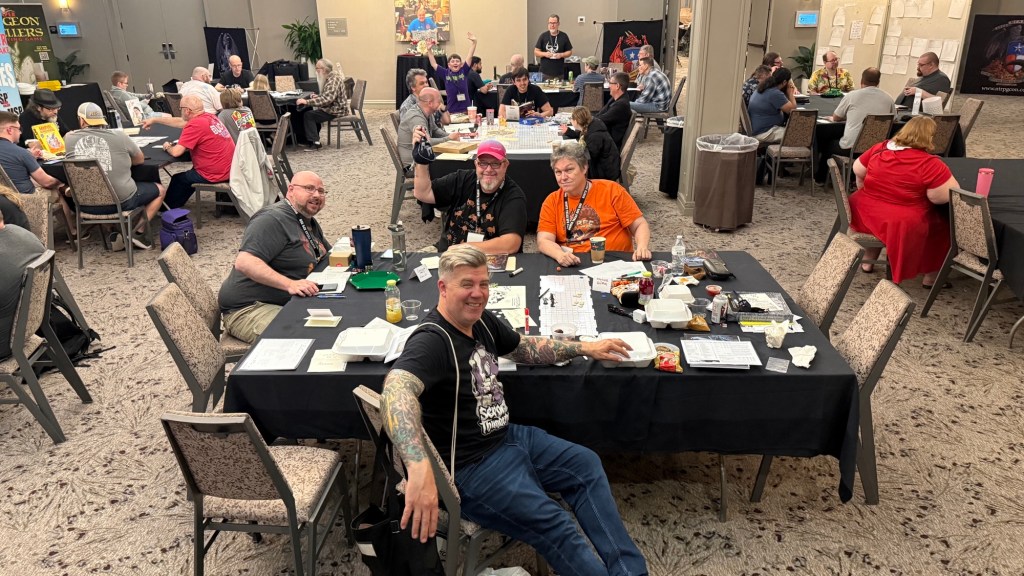
  • At DunDraCon 49 my badge read “Can’t we just play D&D?” A buddy gathered a group and we explored the Necropolis for about 3h
  • Have at least 6 pre-generated characters so players can jump in quickly

Fighters in the Void

Original image from Stewart Crowley’s “Terran Trade Authority” series w/ Prisma Gothic filter.

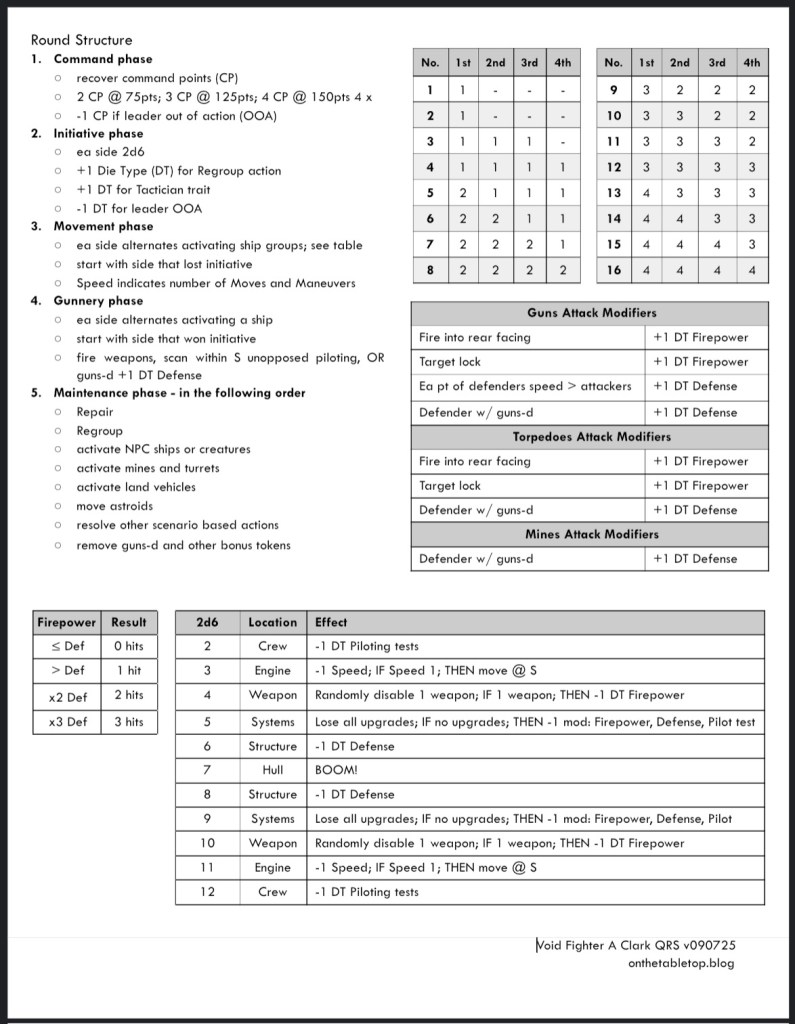
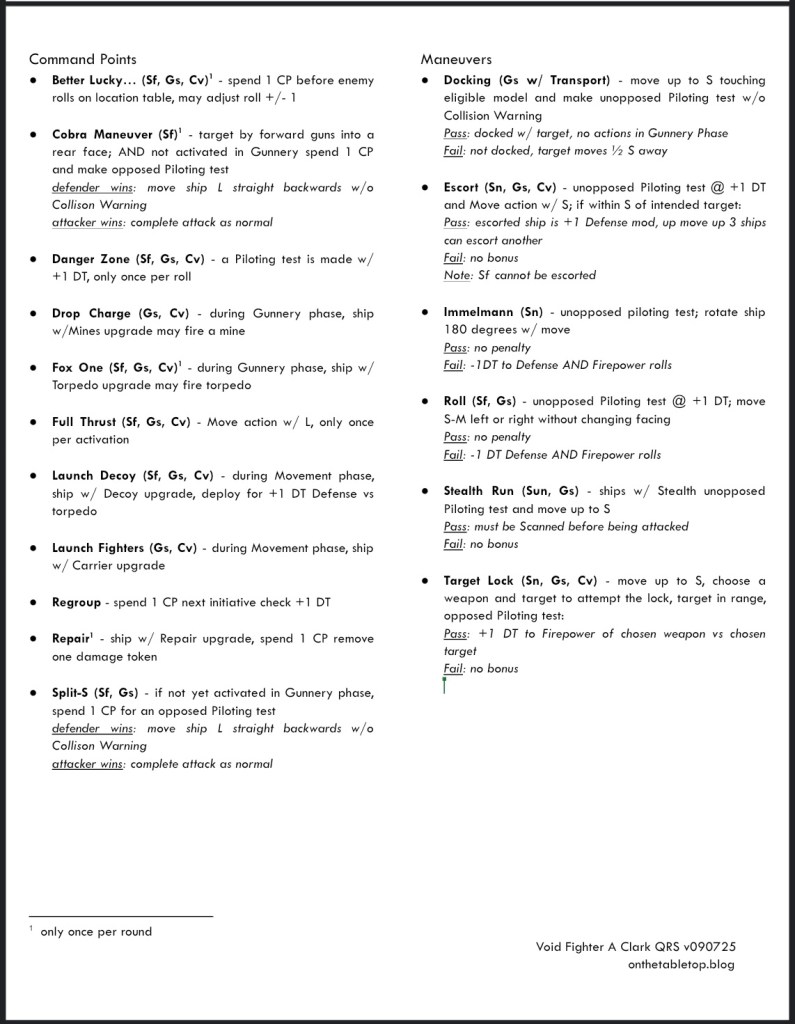
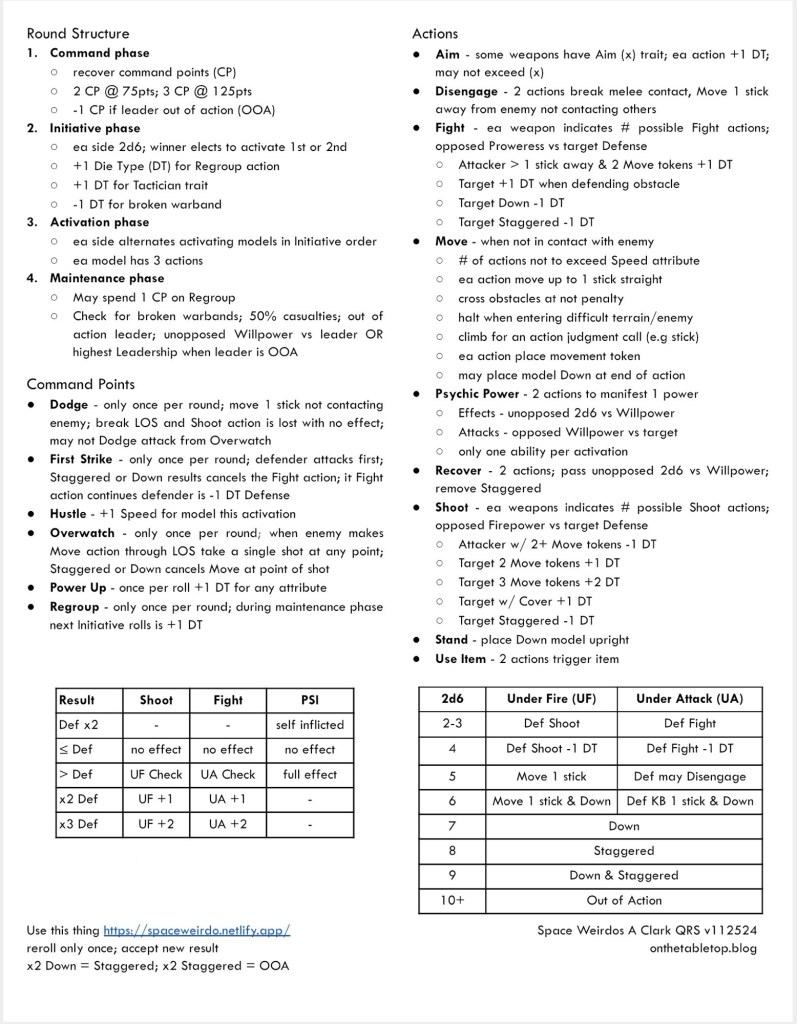
Casey Garske’s “Voidfighter” is out and I’ve just had a chance to play. I enjoyed my first game with these rules and looking forward to the next. In support of my next out I’ve quickly refined my Space Werido QRS in support of Voidfighter.

Grab the first iteration of this QRS here. Find the Voidfighter rules here.

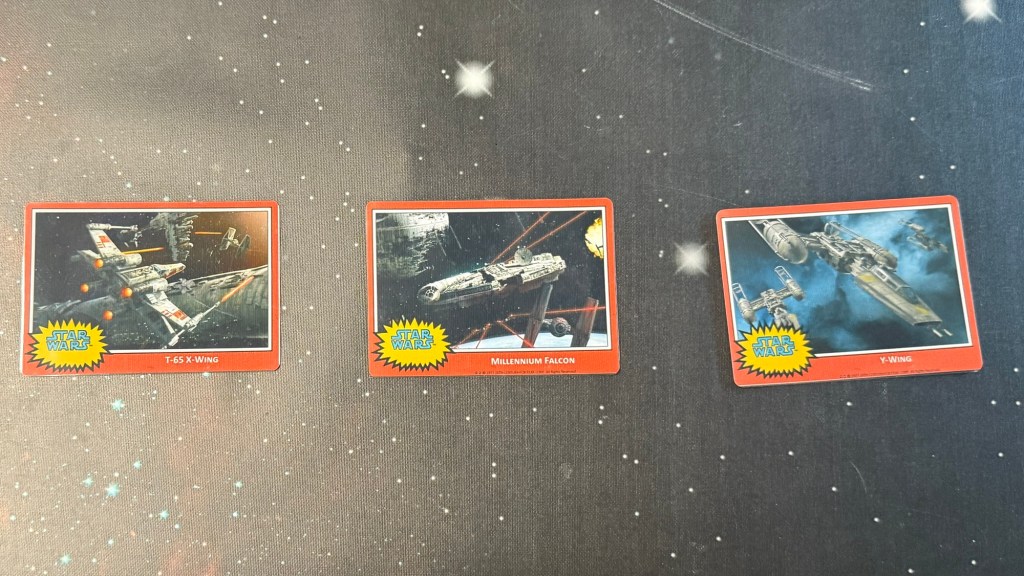
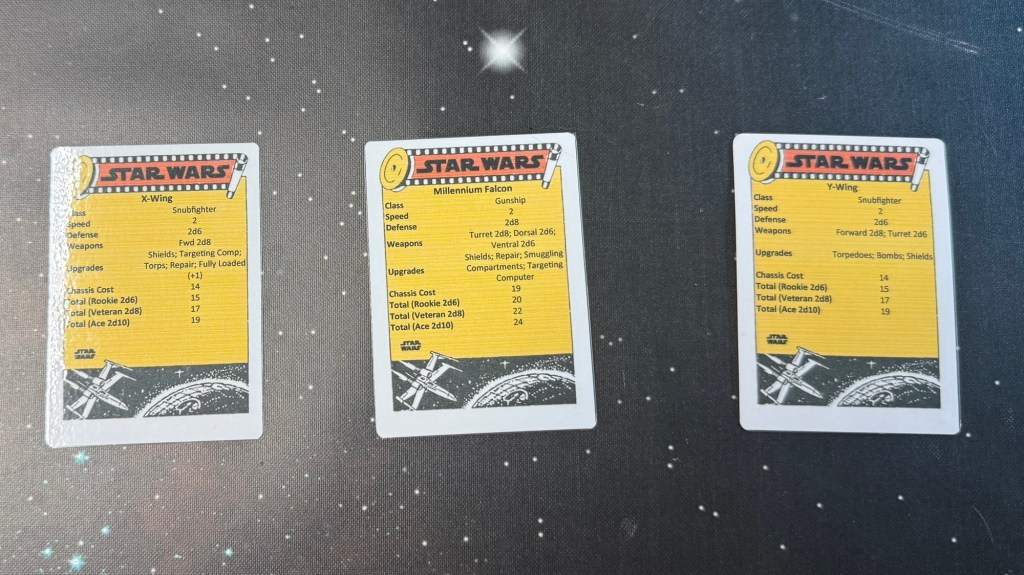
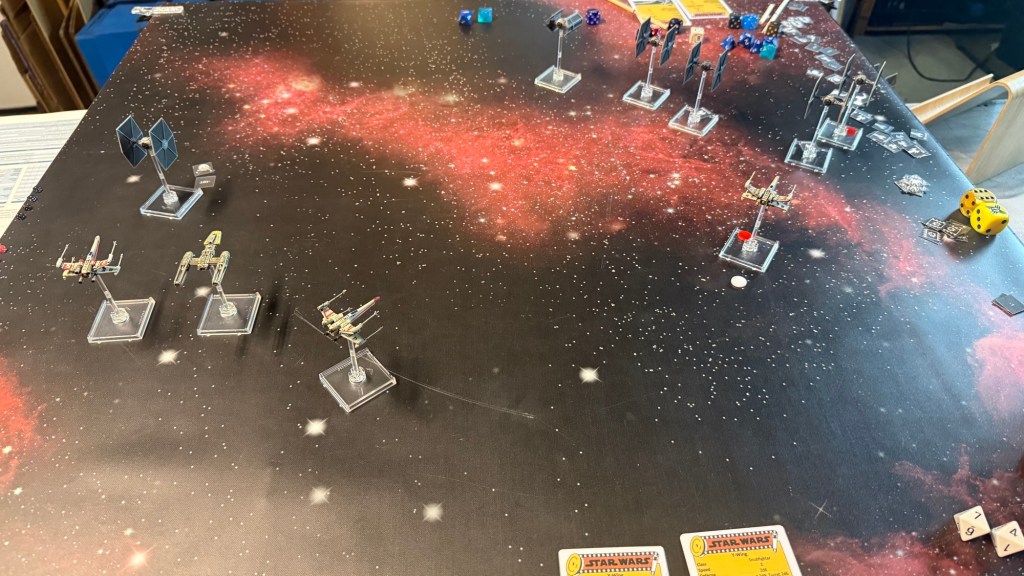
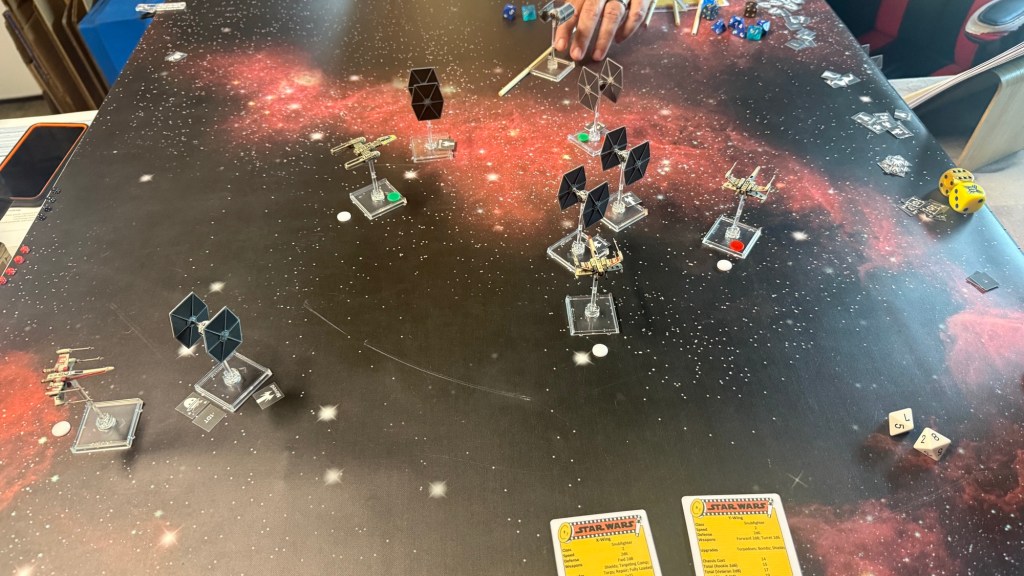
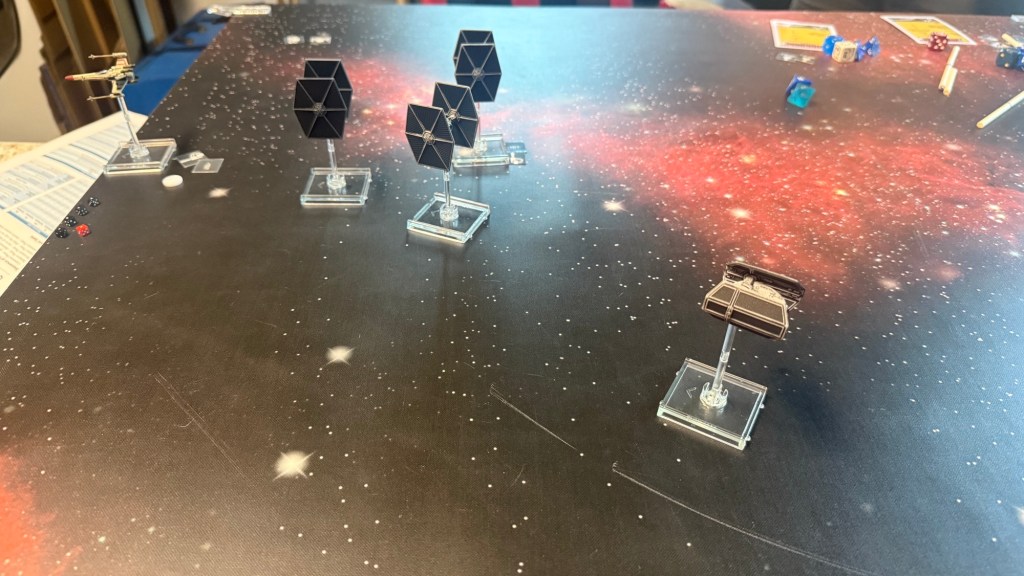
Finally a few snaps from our first game. There are some lovely custom cards prepared by my good friend, sadly they were not enough to save my brave rebels, none of us escaped the fist of the Emperor Jeff. 😦

Update 14 September

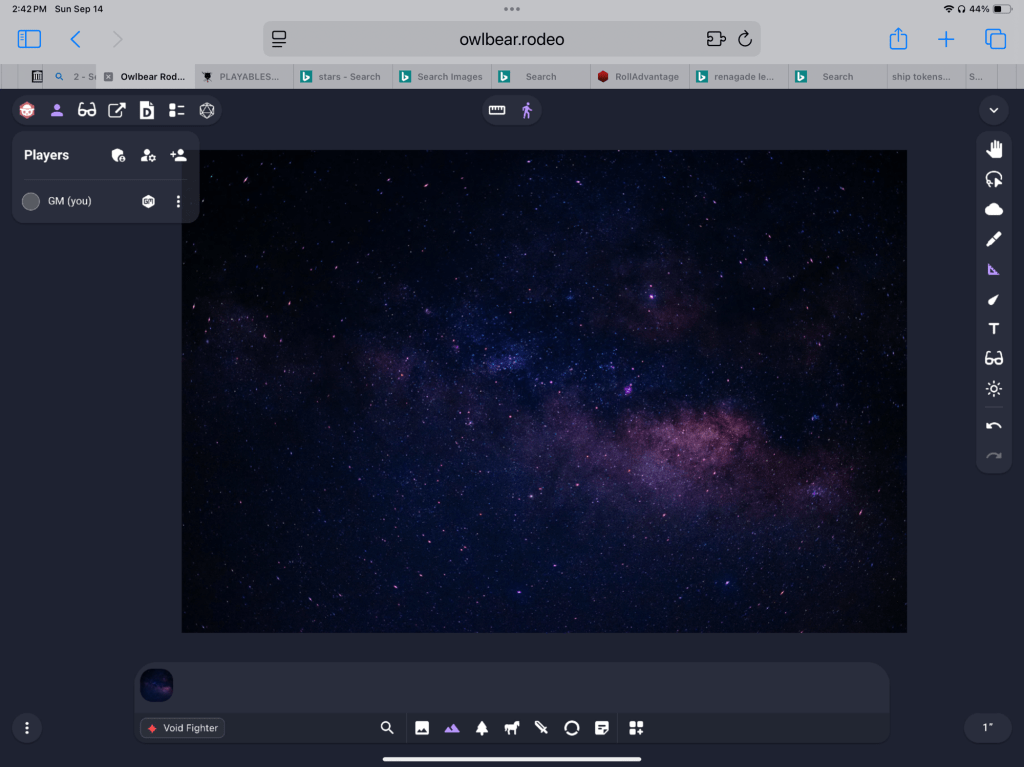
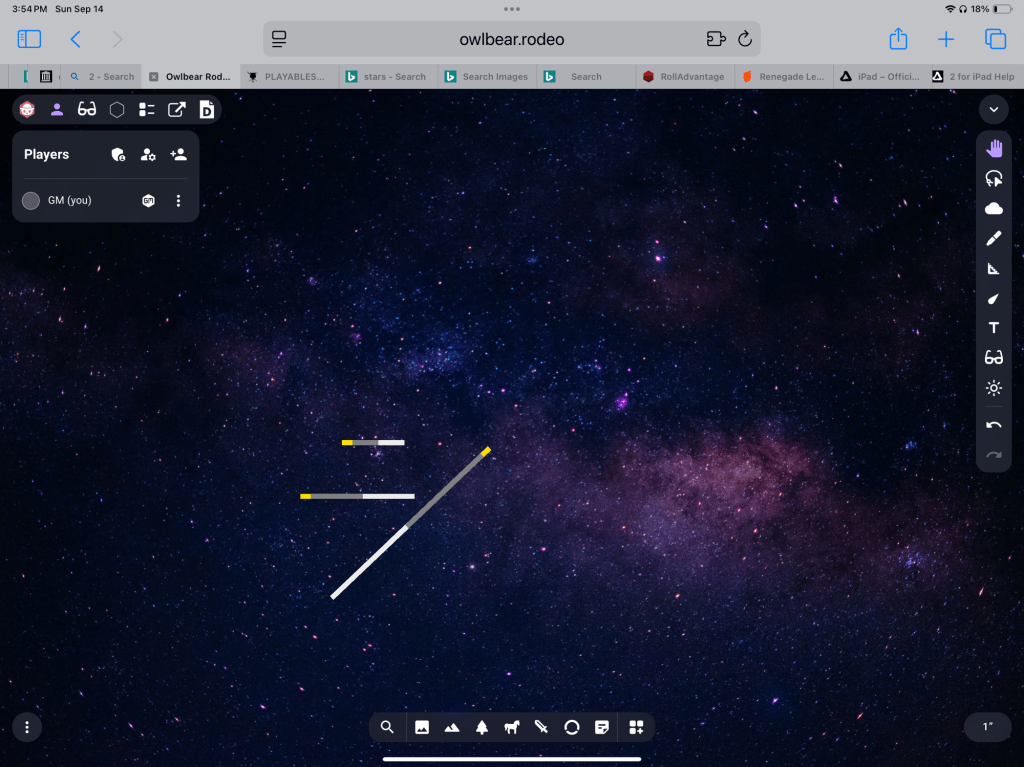
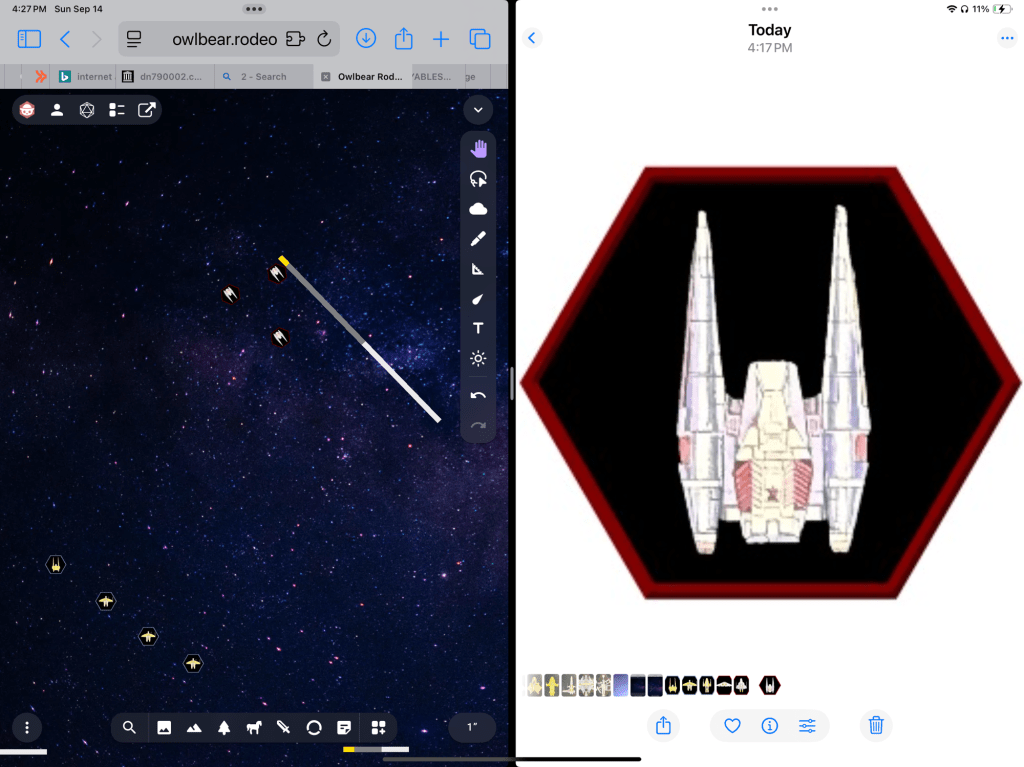
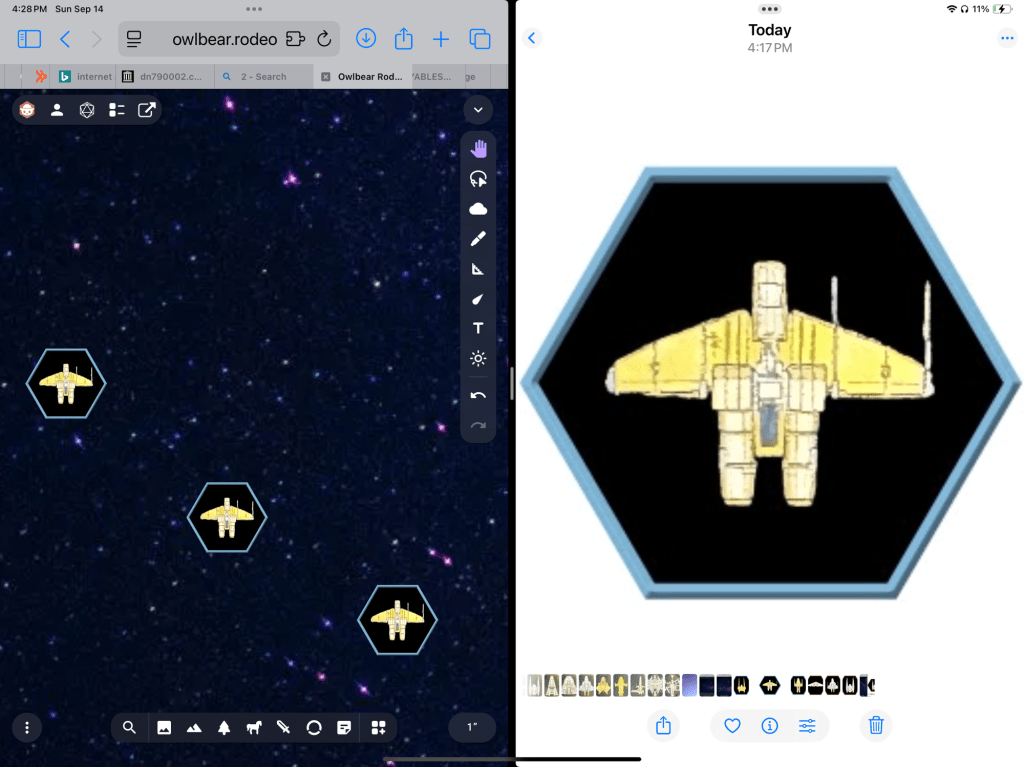
An online gaming buddy has asked if we could play Voidfighter online, sure why not. Here are a few snaps of an Owlbear Rodeo session I whipped up this afternoon. The ships are from FASA’s Renegade Legion: Interceptor.

Update 3 May

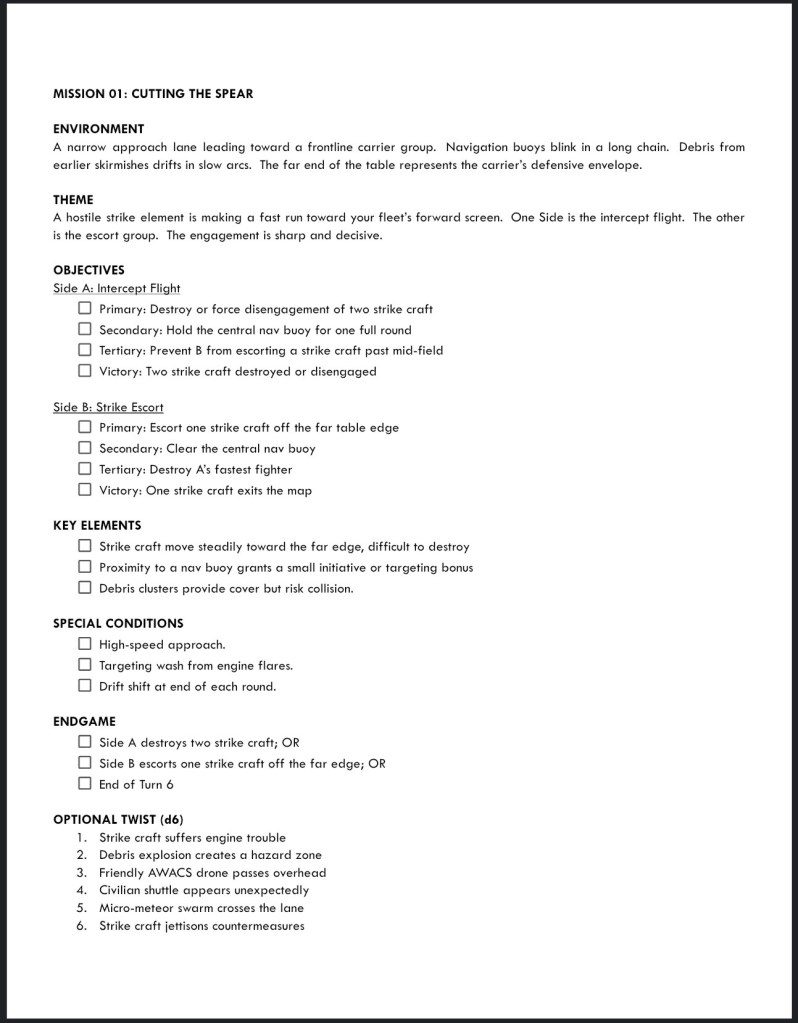
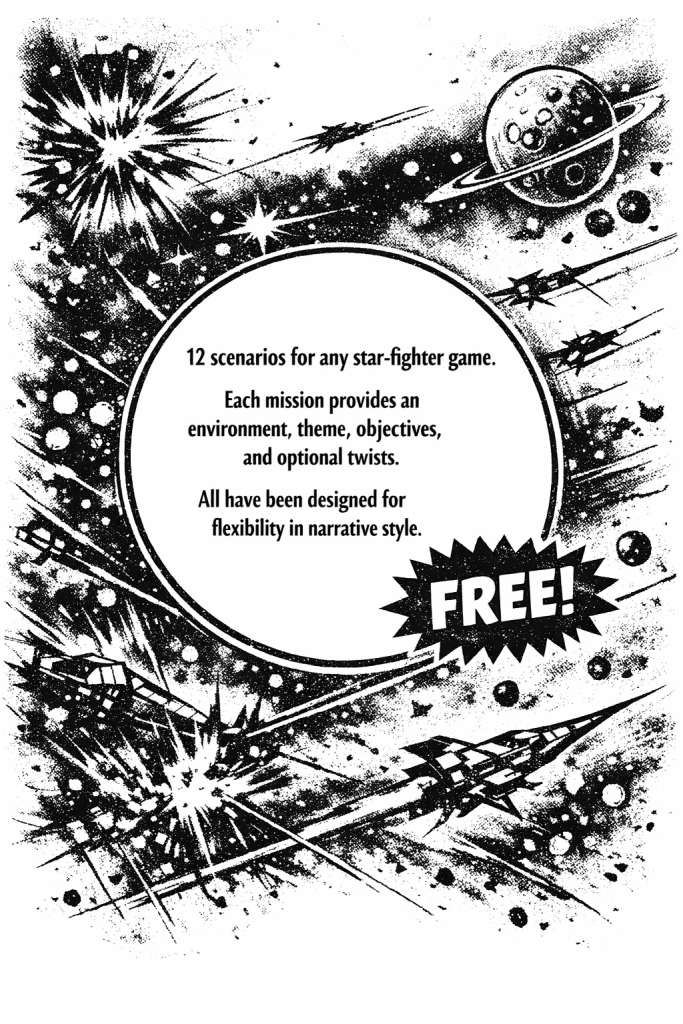
My oldest friend just celebrated a birthday and has been having a grand time with Voidfighter. Inspired by his enthusiasm I organized 12 simple scenarios that I hope will inspire me or others to play more of this fine game.

That’s Weird

Filtered original by Jack Kamen, Weird Science Cover

SPAce…. WEirdOoos…

Our group has gotten ahold of Space Weirdos, an indie sci-fi skirmish game by Casey Garske. This is a tight little 16 page booklet, designed for custom warbands with low model counts.

There is a good deal of nuance tied up in these rules, and after my first play it was pretty clear that I needed a simplified reference during play.

My first effort was a literal cut and paste from the rulebook itself. While useful there were organizational changes I still wanted to make.

Next Generation

With a few games under our belts, I’ve bitten the bullet and worked up a one page QRS that suits my needs perfectly. You can grab the file here.

Update Jan 9

Just had a game of Space Weirdos with a new player. In advance of our game I was brainstorming with Copilot on existing narative based scenario tools, as I find these more interesting than simple pitched battles. A few tools were recommended by AI to help with this:

  • Nordic Weasel – The Scenario Generator – which is a bit higher level than what I wanted
  • Donjon – Mission Generator – focuses on RPG missions in different genres, a reasonable starting point
  • Reedsy – Plot Generator – primarily a writing tool for full story arcs

Copilot offered to build a scenario based on my criteria and with a bit of tinkering arrived at something that suit my needs well. Here’s an example of the output, along with some links to packs of scenarios based on different themes:

Hard Sci-Fi

Space Opera 

Military Sci-Fi

I’ll chalk this up to a win for AI and fitting for a sci-fi theme.

Frosty Star Graves

Filtered work by Jordan Penalva, cover for Gordon Dickson’s “Dorsai” when published by Ace.

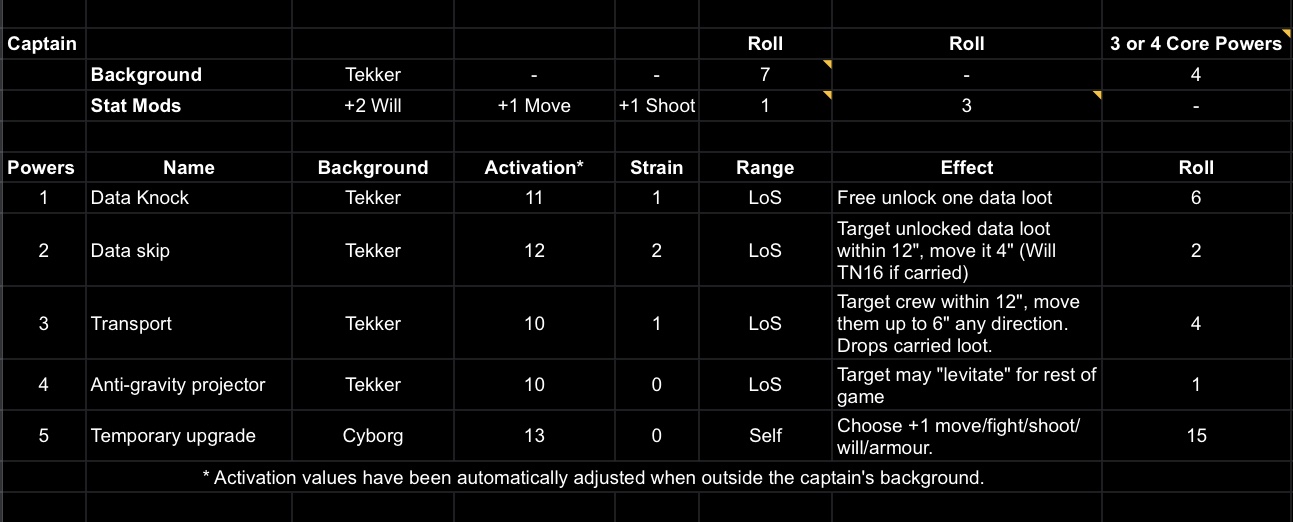
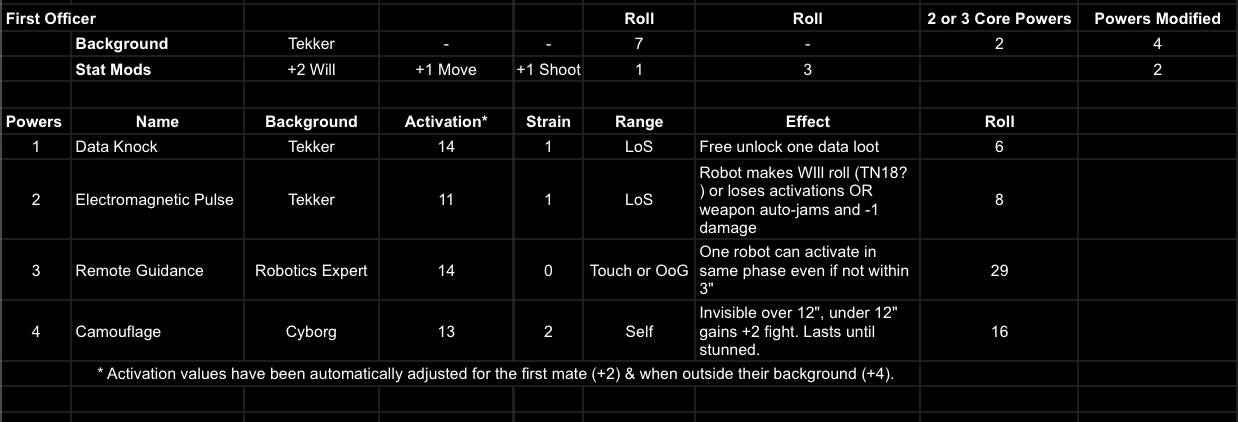
I’ve been interested in Stargrave and while I have plenty of painted miniatures I have zero inspiration to create a crew, even less desire to puzzle over 52 powers, stat mods and what not. I want my friends to be empowered to start playing whenever we gather, not be blocked by record keeping before we even start.

Inspired by online RPG character generators (e.g. save vs total party kill) I’ve built a Google Sheet that randomly generates a Stargrave Captain & First Officer quickly. It produces things like…

There is a good deal of error checking here, but there could be a few bugs lurking especially on the 4th & 3rd powers for the Captain & First Officers respectively. I’ll continue to fine tune that section, but the tool works well enough for the stated objective.

Thank you to the Reddit user u/5eret who compiled the power list, that was my data set for this project. Without your work my task would have been much more difficult.

You can find the Stargrave generator here.

I have also done a 1st edition Frostgrave grimoire generator, which you can find here. It is an Excel document but you should be able to use it with Google Sheets or Open Office.